The Site Got a Noise Complaint but Your Sensor Showed Nothing: Compliance Monitoring on Construction Sites
Share
- A single decibel figure can mean different things, so check the weighting and the averaging period: limits are usually written in dB(A) over an Leq period, not as an instantaneous reading.
- A piling rig that hammers for two minutes and idles for thirteen produces a modest 15-minute Leq, so a compliance record needs the Leq, the maximum level, and the time of each peak.
- The microphone must sit at the permit's measurement point, in free air at head height and clear of walls, because a sensor in the wrong place measures a different site.
- Fit a windscreen, flag windy and rainy periods in the log, and field-check the sensor with a calibrator at the start of monitoring and at regular intervals.
- Define the action for each threshold in advance and log what was done when a limit was exceeded, and keep the raw readings, not just the summary.
Table of contents
The complaint arrived on a Tuesday, from the council. A resident two streets from the site said the piling work had kept her family awake, and the council wanted the contractor's noise records for the week. The site manager pulled the log from the noise sensor on the boundary fence and found nothing to worry about: the highest reading all week was 68 dB, well inside the limit in the permit. He sent the log off with confidence. The council sent it back with a question he could not answer: if the site was so quiet, why had three households complained, and where were the peaks the piling rig must have produced?
The sensor had not lied. It had measured exactly what it was asked to measure, at the place it was mounted, in the way it was configured — and all three of those choices were wrong for the job. A construction noise sensor that shows nothing during a complaint is not evidence of compliance. It is evidence that the measurement was not measuring the noise people complained about. The difference between a reading and a defence comes down to three things: what the number means, where the microphone sits, and how the data is averaged.
dB(A), Leq and the Peak: Three Numbers That Are Not the Same
Sound is measured in decibels, but a single decibel figure can describe several different things, and the confusion between them is the most common reason a site's records fail under scrutiny. The first distinction is weighting. Human hearing is not equally sensitive to all frequencies: we hear mid-range sounds far better than very low or very high ones. The A-weighting curve, written dB(A), adjusts the measurement to match that sensitivity, and it is the weighting almost every construction noise limit is written in. If the sensor is set to the wrong weighting, the log and the limit are not speaking the same language.
The second distinction is averaging. A noise sensor does not report the sound at one instant; it reports an average over a period, and the period changes the answer completely. The standard measure for construction noise is the equivalent continuous level, Leq, usually averaged over a period such as 15 minutes or an hour: it is the steady level that would contain the same total sound energy as the actual fluctuating noise over that period. A piling rig that hammers for two minutes and then idles for thirteen will produce a modest 15-minute Leq, even though the hammering itself was far louder.
The third number is the peak: the maximum level recorded during the period. A limit written for Leq will not be breached by a short loud event, which is exactly why a site can be within its Leq limit and still generate complaints. A proper compliance record keeps all three: the Leq for the permit, the maximum level for the peaks, and the time each occurred. When the council asks what happened at 7:40 on Tuesday morning, the answer has to be in the log, not in someone's memory.
Where the Microphone Sits Decides What It Hears
Sound falls off with distance, roughly halving in energy every time the distance doubles in open air, so a microphone mounted on the site office wall will report a much quieter site than a microphone on the boundary fence. The correct position for a compliance measurement is the one the permit names — usually the nearest noise-sensitive receiver, or a point on the site boundary closest to it — and a sensor anywhere else is measuring a different site.
Height matters too. A microphone at ground level, behind a site cabin or a stack of materials, sits in the acoustic shadow of whatever is in front of it, and the reading drops. The usual practice is to mount the microphone at roughly head height, around 1.2 to 1.5 metres above the ground, in free air, clear of reflecting surfaces — not against a wall, where reflections can add several decibels, and not under an overhang, where the reading is shielded.
Weather changes what the microphone hears as well. Wind across the microphone capsule creates its own noise, which is why outdoor microphones wear a foam windscreen, and why a reading taken in a gale needs to be flagged rather than trusted. Rain on the windscreen adds noise too. A compliance log that does not note wind and rain alongside the readings leaves the data open to challenge: a high reading on a windy day might be wind, not work.
Choosing the Sensor: Range, Class and What 30–120 dB Covers
A noise sensor for construction compliance needs a range that covers the site, from the quiet of a Sunday morning to the loudest impact work. A 30 to 120 dB range is a practical fit: the bottom sits below typical background levels in a built-up area, and the top covers the loudest piling, breaking and cutting work without clipping. Clipping is the failure to watch for: if the loudest events exceed the top of the range, the sensor reports its maximum and stops, and the log shows a flat line at the top of the scale — which looks like a steady loud noise and hides the true peaks.
Class matters too, and it is worth understanding honestly. Precision sound level meters are graded by standard, with Class 1 instruments more accurate than Class 2, and a formal compliance measurement usually calls for a calibrated Class 1 meter operated by a qualified person. A permanently installed sensor on the boundary is a different tool: it provides continuous monitoring, early warning, and a record of when levels rose and fell. It does not replace a formal survey, and it should not be presented as one. Its job is to catch the exceedance early enough to act, and to produce a timestamped record that supports the formal measurement rather than pretending to be it. A survey measures a few hours on a chosen day; a fixed sensor measures every hour of every working day, including the early start nobody scheduled a survey for.
Installation: The Pitfalls That Corrupt the Record
The first installation mistake is mounting the sensor where it is easy rather than where it is representative. A sensor on the site office is measuring the office. A sensor inside a compound, behind a hoarding line, is measuring the compound. The measurement point has to be the one the permit or the local authority names, and if the permit does not name one, the nearest boundary to the nearest dwelling is the defensible choice. Document the position with a photograph and a note of the distance to the nearest receiver.
The second mistake is the cable and the power. A noise sensor on a boundary fence is a long way from the site office, and a long analogue cable run is an invitation to interference. Keep the run short, or use a digital output and a local logger, and protect the cable from plant traffic and from the weather. Power matters as well: a sensor that loses power at the start of the loudest shift produces a gap in the record exactly where the evidence was needed most.
The third mistake is forgetting the windscreen. An outdoor microphone without a windscreen will report wind noise as site noise, and the log will show high readings on windy days that have nothing to do with the work. Fit the windscreen, check it regularly — they tear, clog with dust, and get removed and not replaced — and flag any period when wind speeds were high enough to corrupt the measurement.
Verification: Proving the Record Before Anyone Asks
A compliance record should be checked the way a council will check it. The first check is the simplest: stand at the microphone with a handheld sound level meter during a noisy operation and compare the two readings. They will not match exactly, but they should be in the same range. If the fixed sensor reads ten decibels lower than the handheld meter beside it, something is wrong with the mounting, the windscreen, or the calibration.
The second check is the pattern. Pull a week of data and look at the daily shape: quiet nights, a rise at the start of work, peaks during the loudest operations, a fall at the end of the day. A log that is flat all day is not measuring the site — it is measuring its own noise floor, or a stuck sensor. The third check is the exceedance procedure: pick a period when the Leq rose above the limit, and confirm that the log shows what was done about it. A record that shows exceedances with no response is worse than no record, because it proves the site knew and did nothing.
Keep the raw data, not just the daily summary. A council challenge will ask for the underlying readings, and a summary without the raw log behind it is easy to dismiss. Store the averaging-period Leq values, the maximum levels, and the timestamps, and keep them for at least the duration of the project plus the period the permit requires.
Troubleshooting: When the Noise Record Misleads
| Symptom | Likely cause | What to check |
|---|---|---|
| Sensor shows nothing during loud work and complaints follow | Microphone in an acoustic shadow, or wrong measurement point | Move the sensor to the permit's measurement point, in free air at head height |
| Readings flatline at the top of the range during piling | Loudest events exceed the sensor's range; clipping | Confirm the range covers the loudest work; check the log for flat-topped peaks |
| High readings on windy days with no work running | Wind noise on the microphone; missing or damaged windscreen | Fit or replace the windscreen; flag windy periods in the log |
| Fixed sensor reads far lower than a handheld meter beside it | Calibration drift, blocked windscreen, or wrong weighting | Field-check with a calibrator; confirm A-weighting is selected; clean or replace the windscreen |
| Log is flat day and night, same level at 3 a.m. and 10 a.m. | Sensor stuck, or reading its own noise floor | Check the sensor responds to a loud sound; verify power and the data link |
| Exceedances in the log but no record of any action | No response procedure tied to the alarm | Define an action for each threshold — pause work, move plant, notify the manager — and log it |
Checklist: A Noise Record That Stands Up
- Mount the microphone at the permit's measurement point, in free air at head height, and photograph the position.
- Record Leq over the permit's averaging period, the maximum level, and the time of each peak — not just a single daily number.
- Confirm A-weighting is selected, and that the range covers the loudest work without clipping.
- Fit a windscreen, check it regularly, and flag windy or rainy periods in the log.
- Field-check the sensor with a calibrator at the start of monitoring and at regular intervals.
- Define the action for each threshold in advance, and log what was done when a limit was exceeded.
- Keep the raw readings, not just the summary, for the full period the permit requires.
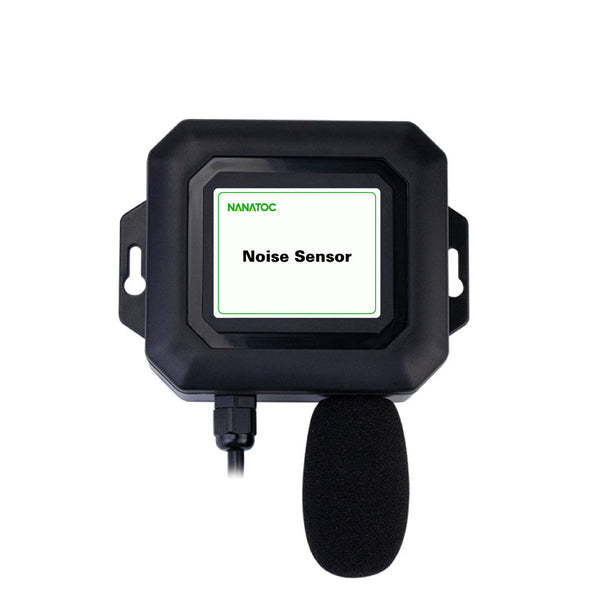
The site manager who sent the council his log was not trying to hide anything. His sensor had simply been asked the wrong question, in the wrong place, in the wrong units. A boundary noise sensor that records Leq and peaks, at the right point, with a windscreen and a calibration check, turns a complaint into a fact: either the site was inside its limit and the record proves it, or it was not, and the record shows it in time to act. The RS485 noise sensor (30–120 dB range) is the kind of boundary instrument this job needs: a wide enough range to cover piling without clipping, on the same RS485 bus as the rest of the site's monitoring, logging every working day so the next complaint arrives with an answer already in the record.
Our engineers can help you pick the right model, check compatibility, and get your installation right the first time.
 RS485 Noise Sensor (30~120dB Range)View product →